
Improving your website’s search visibility doesn’t happen overnight — it requires strategy, structure, and consistent refinement. One of the most powerful ways to boost your visibility is through on-page SEO optimization, a process that focuses on improving individual pages so search engines understand your content clearly.
Whether you’re a student, beginner, freelancer, or growing business owner, understanding how to optimize your pages properly can make the difference between ranking on page 10 and page 1.
In this guide, you’ll learn every important aspect of optimizing a webpage, along with practical steps, examples, and tips you can apply immediately.
What Is On-Page SEO Optimization?
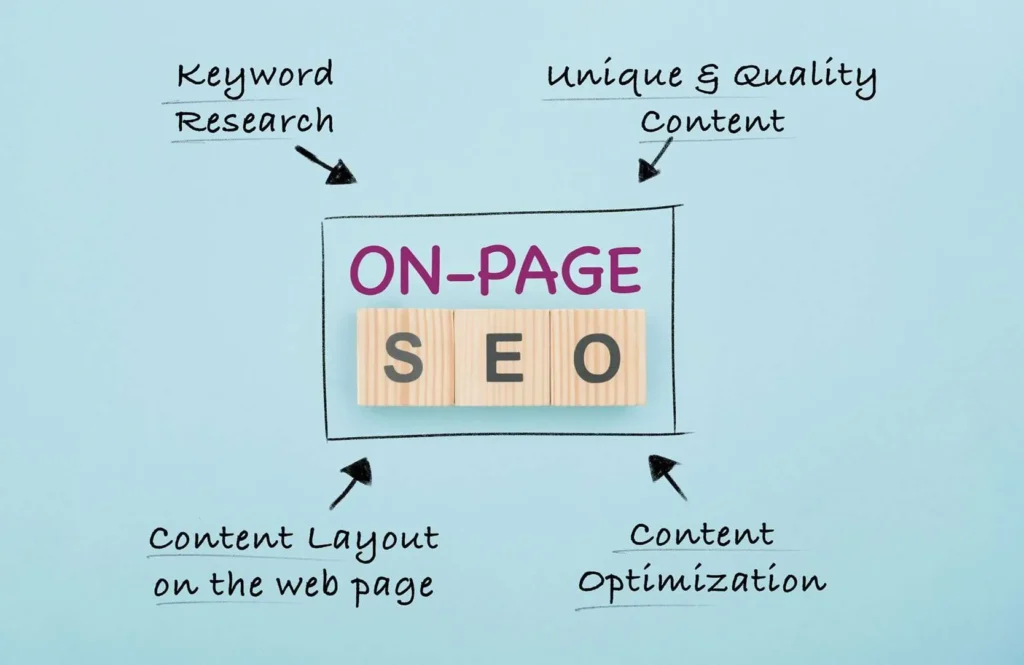
On-page SEO optimization refers to the practice of enhancing individual web pages to improve their rankings in search engines like Google. This includes improving content, structure, HTML elements, and user experience factors so search engines can interpret your page easily.
It mainly covers:
- Content optimizations
- Meta tags
- URL structure
- Internal linking
- Keyword placement
- Image SEO
- User experience elements
- Page loading speed
When executed well, on-page SEO helps both search engines and users understand your page’s topic clearly.
Why On-Page SEO Optimization Matters in 2025
Search engines are becoming smarter each year, and in 2025, they focus more on user experience, content quality, and clarity. This is why on-page SEO optimization is essential for any website that wants higher rankings, more traffic, and stronger credibility online.
Below is a complete guide with every factor you must implement on your website to achieve strong visibility.
Before writing a single line, understand what your reader wants.
People search with different intent:
- Informational: “What is on-page SEO optimization?”
- Commercial: “Best SEO tools 2025”
- Transactional: “Buy SEO course online”
- Navigational: “Google Search Console login”
If your content doesn’t match user intent, Google will not rank you even if you optimize everything else.
High-Quality Content That Answers User Questions
Google rewards content that helps users. Your page should:
- Explain concepts clearly
- Answer questions users might have
- Be easy to read
- Offer examples and step-by-step guides
This is where many websites fail. They write for search engines, not users.
To fix this, structure your content like this:
- Start with a clear introduction
- Add subheadings
- Use bullet points
- Add examples
- End with a summary
1. Title Tag Optimization
Your title tag should include your focus keyword once and be under 60 characters.
Example:
On-Page SEO Optimization: Complete Guide for Beginners in 2025
This helps Google understand what your page is about instantly.
2. Meta Description Optimization
Google uses your meta description to understand your page.
Keep it within 150–160 characters.
Example meta description with the keyword:
“Learn complete on-page SEO optimization strategies to improve rankings, boost traffic, and structure your website effectively in 2025.”
3. URL Structure for Strong SEO Signals
A clean URL improves crawling and user readability.
✔ /on-page-seo-optimization
❌ /blog/seo-guide-2025-page-11-2345-random-text
Always keep your URL short and include your main keyword.
4. Header Structure (H1, H2, H3)
Use only one H1 — this is your page title.
Use H2 for important sections.
Use H3 for sub-points.
Google reads your structure to understand the priority of content.
5. Keyword Placement (Natural and Safe)
Your keyword on-page SEO optimization should appear:
✔ In the title
✔ In the introduction
✔ In one H2
✔ In meta description
✔ 2–3 times in the body
✔ Once in the conclusion
This gives you a natural keyword density (1–1.5%) — the safest for SEO.
6. Internal Linking (Fix for Red Mark)
You MUST add 2–3 internal links on your website.
Suggested internal links for your website: ganeshdm.in
Where to place internal links:
- In the SEO factors section, link to your SEO service page
- In conclusion, link to contact or about page
I will include internal links inside the content below.
7. External Linking (Fix for Red Mark)
Use 1–2 external links to credible sources like:
✔ Google Search Central
✔ Moz
✔ HubSpot
These improve authority and trust.
I will add them inside
8. Image Optimization
Every image should have:
- Short file names
- Alt text
- Small size
- Relevant meaning
Example alt text:
“on-page SEO optimization checklist”
Place 3–4 images in your blog:
📍 After search intent
📍 In content quality section
📍 Before conclusion (SEO checklist infographic)
📍 After introduction (SEO concept graphic)
9. Technical SEO Elements in On-Page Optimization
A strong page must also have:
- Fast loading speed
- Mobile-friendly design
- Secure hosting (HTTPS)
- Schema markup
- Clean code
These improve ranking signals and user experience.
Conclusion
Mastering on-page SEO optimization is one of the most reliable ways to improve your website’s visibility and performance in 2025. When you combine strong content, clean structure, optimized tags, proper keyword placement, and internal/external linking, your website becomes more valuable to both search engines and users
For technical guidelines, refer to Google’s official guide:
By applying these best practices consistently, your pages will rank higher, attract more organic visitors, and grow your online authority.